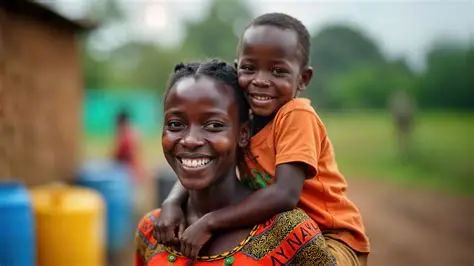

Episode 3: The Years Nobody Saw
People often say time heals. I don’t think that’s entirely true. Time doesn’t heal every wound. It simply teaches you how to carry the ones that never completely disappear. By the second year, our lives had settled into a routine.
Every weekday began before sunrise. I prepared breakfast, packed school lunches, and spent the rest of the morning baking. My small food business had grown through word of mouth. One customer became three. Three became ten. Before long, offices, schools, and a few shops in our area were placing regular orders.
It wasn’t enough to make us wealthy. It was enough to keep us moving. The greatest gift wasn’t the income. It was my dignity. I no longer dreaded the end of each month the way I once had. I still worried about money, but I wasn’t waking up every morning wondering how we would eat.
The children changed too. Grief had forced them to grow up faster than I wanted. My eldest became quieter. He rarely asked for anything, even when he needed it. If his school shoes were wearing out, he would polish them until they looked presentable instead of telling me they had become too tight.
One evening, I noticed him sewing the strap of his school bag.
“Why didn’t you tell me it was torn?”
He shrugged.
“I didn’t want you to spend money.”
His answer stayed with me long after he went to bed. Children shouldn’t have to think like that. They should be worrying about tests, friendships and football, not household finances. The middle child was different. He became the peacemaker in the house. Whenever his younger brother and sister argued, he stepped in before I even heard their voices.
Sometimes I watched him from the kitchen and saw flashes of the man his father had been. It made me smile. It also made me cry when no one was looking. The youngest struggled the most. He remembered his father only in pieces.
A laugh. A voice. The way he carried him on his shoulders after church. As the years passed, those memories faded. One Saturday afternoon, while I was arranging pastries for delivery, he walked into the kitchen holding an old family photograph.
“Mummy?”
“Yes?”
“Was Daddy taller than Uncle Chinedu?”
I looked at the photograph before answering.
“Yes.”
He nodded thoughtfully.
“I can’t remember.”
Those three words hurt more than I expected. I had spent so much energy trying to keep our lives together that I hadn’t noticed his memories slipping away. That evening, I gathered all three children in the sitting room. I brought out old photo albums that had remained untouched since the funeral. We spent hours looking through them.
Their father laughing at the beach. Holding each of them as babies. Dancing awkwardly at a cousin’s wedding. Burning the Christmas rice because he insisted he could cook. The children laughed until tears rolled down their faces. For the first time in years, we talked about him without crying.
From then on, it became our tradition. Every year on the anniversary of his passing, we shared stories instead of silence. We wanted the children to remember the joy of his life, not only the pain of his death.
As my business grew, so did the responsibilities. I hired a young lady from our neighbourhood to help with baking and packaging. It felt strange paying someone a salary. There had been a time when I wasn’t sure I could afford sugar.
Now someone else’s livelihood partly depended on mine. Life has a quiet way of rewarding persistence. Not all challenges came from outside. Some came from within the family. There were relatives who believed I should still remarry. Others questioned every financial decision I made. A few assumed that because I had started earning an income, I no longer needed help.
I learned an important lesson during those years. People will always have opinions about a life they are not living. Eventually, I stopped trying to explain myself. I focused on my children instead. When my eldest prepared to write his final secondary school examinations, I found him studying late one night.
“You should sleep.”
“I still have Biology.”
“You’ve been reading since evening.”
He looked up from his books.
“Mummy…”
“Yes?”
“I want to study engineering.”
I smiled.
“You’ve wanted that for years.”
He hesitated.
“It’s expensive.”
I knew what he wasn’t saying. He was asking whether we could afford it without making me feel guilty. I walked over and closed his textbook.
“Listen to me carefully.”
He looked into my eyes.
“Your father and I always dreamed that all of you would go to university. That dream didn’t die with him.”
“What if the money isn’t enough?”
“We’ll cross that bridge when we get there.”
He smiled for the first time that evening. Years earlier, those words had been spoken to him by a frightened widow who wasn’t sure she believed them herself. Now they came from a woman who had learned that tomorrow often finds a way of taking care of itself when you refuse to stop walking.
That night, after everyone had gone to bed, I stood in the doorway of each child’s room. It had become a habit. I watched them sleeping and realized something.
For years, I had been praying for strength. Somewhere along the journey, without even noticing, God had answered that prayer. Not by removing the difficulties. But by changing the woman who faced them.
